
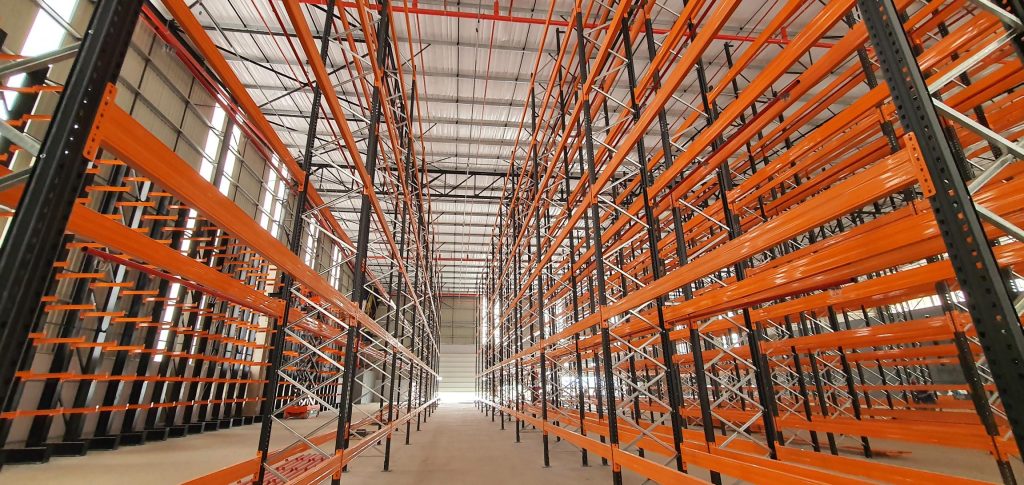
Understanding rivet shelving vs. cantilever racking is essential when setting up practical storage for your space.
The Appeal of Rivet Shelving
Rivet shelving is a popular choice due to several reasons:
- It’s boltless and easy to assemble.
- It does not require tools for the setup.
- The shelves can be adjusted to cater to changing storage needs.
- It’s a cost-effective and flexible solution, often used in garages, small warehouses, or growing businesses.
It’s a perfect fit for storing a variety of items such as boxes, bins, or small equipment.
The Unique Features of Cantilever Racking
Contrarily, cantilever racking is uniquely designed for storing long or awkward items such as wooden planks, pipes, or rolled materials. This shelving solution is characterised by:
- Open fronts and adjustable arms for easy loading and unloading.
- Being commonly used in locations where heavy-duty storage is needed such as workshops, timber yards, and industrial sites.
A Deeper Look: Rivet Shelving and Cantilever Racking Compared
Usability based on Item Type
One obvious difference between the two is the type of items they can accommodate. While rivet shelving supports general storage needs, cantilever models are curated for longer or heavier items.
Suitability Based on Space Availability
The suitability of rivet shelving and cantilever racking also depends greatly on the available space. Rivet shelves can fit neatly into smaller areas, maximising vertical storage, whereas cantilever racks require more floor space, yet provide quick, barrier-free access to materials.
Making the Right Storage Choice
Determining Factors
The decision to choose between rivet shelving and cantilever racking hinges on what you intend to store. If you have lighter items and want a quick setup, rivet shelving could suffice. However, for bulkier or unstackable materials, cantilever racking proves more efficient.
The Importance of Context
Remember, what is effective in one setting (e.g., a parts shop) may not be in another (e.g., a lumber yard). Hence, understanding how both types of storage work in your specific scenario is pivotal.
Knowing the differences between rivet shelving and cantilever racking not only aids in cost-effectiveness but also contributes to a safer, more manageable space. Having a clear understanding of the benefits of rivet shelving vs. cantilever racking can help you make smarter storage decisions, whether you are equipping a small business or managing warehouse materials.
Rivet Shelving vs. Cantilever Racking: Key Function and Layout Considerations
When it comes to planning your storage space, the rivet shelving vs. cantilever racking decision mostly boils down to the size and shape of the items you’re storing. Rivet shelving is great for boxes, bins, and small tools—items that fit neatly on flat shelves. Installation is simple and requires no bolts or extra hardware, which means you can get up and running quickly. It’s also budget-friendly and easy to move around if your layout changes over time.
Cantilever racking takes another approach by supporting longer or heavier items like timber, pipes, and steel lengths. The open design allows easy access on one or both sides. If you’re in a building supply business or need heavy-duty storage for awkward items, this style gives you the support and strength you need. Just keep in mind, it does take up more floor space and might cost more upfront.
Rivet Shelving vs. Cantilever Racking: Durability and Load Support
Comparing rivet shelving vs. cantilever racking reveals clear differences in strength and load capacity. Rivet shelving handles light to medium loads very well. You’ll often find it in garages, stockrooms, or small warehouses where quick setup and flexibility are priorities. Its adjustable shelves make it perfect for changing inventory.
Cantilever racking, by contrast, is built to last under heavy use. When rivet shelving and cantilever racking are compared in terms of durability, cantilever racks come out ahead for holding large or uneven products. Industries that handle bulky inventory rely on this kind of system because it can withstand tough daily use while keeping goods accessible and organised.
Rivet Shelving vs. Cantilever Racking: Visual Organisation and Access
Not all storage systems are created equal when it comes to access and visibility. Rivet shelving vs. cantilever racking design affects how easily you can reach or spot stored items. Rivet shelving keeps storage simple—its solid vertical structure fits tightly in most spots, saving floor space while keeping items out of sight. This works well if neatness and compact stacking are your goals.
In contrast, when rivet shelving and cantilever racking differences are considered in open environments, cantilever outperforms. It gives you easier access and a cleaner look, especially with larger items. If you’re storing items where visibility matters—think retail overflow or a workshop with regular loading and unloading—then cantilever racking helps improve workflow.
Choosing Between Rivet Shelving and Cantilever Racking for Small and Large Operations
If you’re still weighing up rivet shelving and cantilever racking compared side by side, consider the scale of your operation. Rivet units suit small businesses or spaces where configurations change regularly. They’re easy to shift or reassemble, adapting to new products or seasonal shifts. Cantilever racking, on the other hand, is made for scale—it stays put, supports more weight, and simplifies access for forklifts or daily restocks.
Look at your current needs, but also think ahead. Will your products grow in volume or size? Comparing rivet shelving and cantilever racking isn’t just about the items you have now—it’s about planning storage that grows with your business. Depending on your space, load type, and budget, the best answer might be a blend of both types.
Rivet Shelving vs. Cantilever Racking: What to Consider First
Deciding between rivet shelving and cantilever racking comes down to what you store, how you use your space, and your budget. If you’re keeping boxes, bins, or evenly shaped items, rivet shelving is usually the better fit. It’s easy to set up, simple to shift around, and fits well in tight areas. On the other hand, cantilever racking handles longer and uneven items—think timber, pipes, or steel rods—without a problem. The open design makes it easier to load and pick those bulky items quickly.
Understanding Rivet Shelving and Cantilever Racking Differences
When looking at rivet shelving and cantilever racking differences, the size and weight of the stored items matter most. Rivet shelving supports lightweight to medium items and is great if your inventory is changing often. It uses minimal floor space and takes advantage of height. Cantilever racking needs more room but gives strong support for long or heavy stock. These shelving types aren’t the same—it’s all about fit and function.
Rivet Shelving vs. Cantilever Racking Layout and Space Use
Space can make or break your setup. Rivet shelving shines in compact areas, especially where vertical storage helps. If you’re working in a tight warehouse or want shelves you can update easily, rivet is smart. But for larger storage needs and when items don’t stack neatly, cantilever racking gives more breathing room—and better access. This matters if you’re working outside or in open-floor warehouses.
Rivet Shelving and Cantilever Racking Compared by Cost
Comparing rivet shelving and cantilever racking on price can help clarify your choice. Rivet shelving can cost less upfront and suits businesses needing quick setups. It’s also cost-effective if you’re expanding or moving. Cantilever racking is pricier, but if you work with heavy-duty materials, it’s a stronger long-term solution. Using both types allows for a balanced, flexible approach for many.
Should You Mix These Systems?
There’s no one-size-fits-all when it comes to rivet shelving and cantilever racking compared side by side. Combining both can give you the best of both worlds, especially if your inventory includes large items and small stock. Use rivet shelving for boxes and fast-moving goods, while reserving cantilever units for bigger stock. At Krost, we help tailor plans that make storage simple and efficient—with storage solutions that work around your needs.
Discover Your Ideal Solution Today
Choosing the right system is necessary for maximising your storage efficiency and sustaining growth. Making informed decisions now paves the way for future success, whether you’re a small business adapting to dynamic storage needs with rivet shelving, or an industry that relies on the robust support of cantilever systems. At Krost Shelving & Racking, we are committed to providing you with the expertise and tailored solutions to meet your unique storage requirements. Contact us today to explore the perfect shelving options for your business, and let us help you create a functional space that grows with you.

