
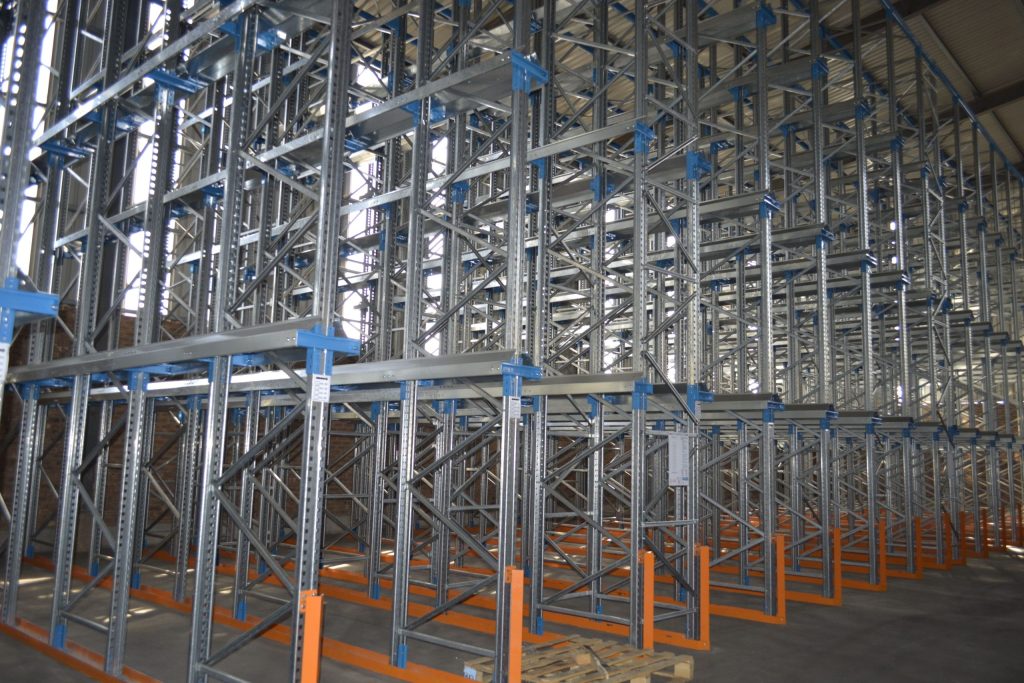
The decision between warehouse shelving or drive-in racking is one of the most critical choices a warehouse manager or business owner faces. It is a decision that fundamentally shapes operational efficiency, stock management, and long-term scalability. While both systems are designed to store goods, the warehouse shelving and drive-in racking differences are profound, dictating everything from product access speed to overall storage density.
This comprehensive guide, brought to you by the warehouse storage experts at Krost Shelving & Racking, will dissect the core distinctions between these two popular systems. We will move beyond simple definitions to explore the real-world impacts on your inventory flow, picking strategies, and bottom line, ensuring you select the structure that best supports your business goals.
Understanding the Core Difference in Warehouse Storage
At its heart, the distinction between warehouse shelving and drive-in racking differences is a matter of storage philosophy: access versus density.
Purchasing warehouse shelving is the go-to choice when access and variety are paramount. It is an selective storage system designed to keep every single item or SKU readily available without needing to move other stock. This is achieved through a design that prioritizes aisles and direct visibility, making it ideal for high-volume, fast-moving, or highly varied inventory.
Buying drive-in racking, conversely, is a strategic move toward a compact storage system that maximises density by minimising aisle space. Forklifts move directly into deep racking lanes, compressing as much stock as possible into the available space. This design sacrifices immediate access to individual pallets for the sake of unparalleled space utilisation, making it perfect for bulk storage of uniform products.
The choice is rarely about which system is “better” overall, but rather which system is better suited to your specific product characteristics and operational workflow.
Dissecting the Key Differences: Access, Density, and Stock Flow
To make an informed decision between warehouse shelving or drive-in racking, it is essential to compare them across the key metrics that define warehouse performance.
1. Storage Density and Space Utilisation
The most striking of the warehouse shelving and drive-in racking differences is their approach to space.
| Feature | Warehouse Shelving | Drive-In Racking |
|---|---|---|
| Storage Density | Low to Moderate | High to Very High |
| Space Utilisation | Typically 40-60% | Can exceed 80% |
| Aisle Requirement | High (Aisle for every row) | Low (Forklifts drive into lanes) |
| Ideal Use Case | High SKU count, fast-moving items, direct picking. | Low SKU count, bulk storage, seasonal inventory. |
Drive-In Racking is a champion of space efficiency. By eliminating most working aisles and allowing pallets to be stored back-to-back and vertically, it can increase warehouse utilisation to over 80%. This is a cost-effective solution for businesses dealing with large volumes of the same product in a limited footprint, such as in cold storage or bulk production areas where the cost of space is at a premium.
Warehouse Shelving, while using more floor space, provides a higher degree of flexibility. The space it dedicates to aisles is a necessary trade-off for speed and control.
2. Access Speed and Picking Efficiency
Access speed is where the fundamental warehouse shelving vs. drive-in racking debate is won or lost for many operations.
- Warehouse Shelving: Offers 100% immediate access to every item. This is critical in high-demand environments where pick times and visibility are paramount. Staff can grab what they need right away, which keeps things running smoothly and reduces errors in fast-paced order fulfilment. This makes it the superior choice for operations with frequent order picking and a need for quick turnaround.
- Drive-In Racking: Access is restricted. To retrieve a pallet, the forklift must enter the lane and remove all pallets in front of the target pallet. This is a slower, more deliberate process. The efficiency comes from the density, not the speed of an individual pick. This system is best suited for goods that do not require daily access or rotation, such as cement, timber, or bulk dry goods.
3. Stock Rotation and Inventory Management (FIFO vs. LIFO)
The method of stock rotation is a non-negotiable factor when deciding between warehouse shelving or drive-in racking, especially for businesses handling perishable goods or products with expiry dates.
| Stock Flow Method | Warehouse Shelving | Drive-In Racking |
|---|---|---|
| LIFO (Last In, First Out) | Supported (Depending on setup) | Primary Method (Single-entry lanes) |
| FIFO (First In, First Out) | Supported (Easily achieved) | Requires Drive-Thru configuration (Two-aisle) |
| Best for Perishables | Yes | No (Unless Drive-Thru is used) |
| Best for Non-Perishables | Yes | Yes |
Drive-In Racking is primarily a LIFO system. The last pallet stored in a lane is the first one removed. This is perfect for non-perishable items stored in large quantities, like building materials or bulk packaging, where the age of the stock is irrelevant. If a FIFO system is required, a Drive-Thru Racking system—which requires two aisles (one for loading, one for unloading)—must be implemented, which reduces the overall density advantage.
Warehouse Shelving offers superior flexibility, easily supporting both FIFO and LIFO depending on the shelf layout and picking strategy. For stockrooms with frequent order picking, goods with expiry dates, or items that require meticulous rotation and hygiene checks, shelving provides the necessary control and visibility.
4. Flexibility and Scalability
One of the biggest wins for warehouse shelving is its flexibility and adaptability. As your stock changes, you can reconfigure shelving more easily than drive-in systems.
- Shelving: Is highly modular and adjustable. Need to introduce a new product line, shift your layout to handle returns, or accommodate seasonal items? Shelving adjusts with minimal effort, giving you options down the track. This makes it ideal for handling frequent SKU updates and operations that need to pivot quickly.
- Drive-In Racking: While sturdy and efficient with space, it is a fixed structure. Once installed, major changes to the lane depth or configuration require significant effort and cost. It is a long-term solution for a stable, high-volume inventory profile.
Part 3: When to Choose Warehouse Shelving
Choosing warehouse shelving is a strategic decision for operations where the value of speed, variety, and direct access outweighs the need for maximum space density.
Ideal Scenarios for Warehouse Shelving:
- High SKU Variety: If your warehouse manages a diverse inventory with many different product lines (e.g., retail distribution, spare parts, e-commerce fulfilment), shelving allows for clear identification and easy access to each unique SKU.
- Fast-Moving Inventory (High Throughput): Operations with a high volume of daily picks and a need for quick order fulfilment benefit from the direct access shelving provides. The time saved on every pick quickly compounds into significant operational efficiency.
- Perishable or Date-Sensitive Goods: Any product with an expiry date, such as food, pharmaceuticals, or certain chemicals, requires strict FIFO rotation. Shelving systems facilitate this rotation with clear visibility and easy access to the oldest stock.
- Hand-Stacked and Smaller Items: Shelving is designed for non-palletised goods that are handled manually. From small components and tools to boxed inventory, shelving offers the ergonomic and organisational structure needed for efficient hand-picking.
- Future Flexibility: For growing businesses or those with an evolving product catalogue, the modular nature of shelving allows for easy expansion and reconfiguration without major capital expenditure.
Types of Warehouse Shelving Solutions:
Krost Shelving & Racking offers a variety of shelving solutions tailored to specific needs:
- Boltless Shelving: Easy to assemble and adjust, perfect for general warehouse and back-of-house storage.
- Longspan Shelving: Designed for bulkier, heavier items that are still hand-picked, offering wide, clear spans.
- Mobile Shelving: Utilises a track system to eliminate fixed aisles, creating a high-density shelving solution that is still fully selective. This is an excellent compromise when density is needed but with 100% access.
Part 4: When to Choose Drive-In Racking
Choosing drive-in racking is the optimal choice when the primary business objective is to maximise storage capacity for a limited number of SKUs, often referred to as a compact storage system.
Ideal Scenarios for Drive-In Racking:
- High-Volume, Low-SKU Inventory: The system is best suited for storing large quantities of the same product, such as raw materials, finished goods from a single production run, or seasonal bulk stock.
- Space Constraint is Critical: When warehouse space is limited or extremely expensive, drive-in racking’s ability to utilise over 80% of the floor area provides a superior return on investment compared to conventional systems.
- Non-Perishable Goods (LIFO): For products where the age of the stock is not a concern, the LIFO method of single-entry drive-in racking is highly efficient. Examples include beverages, building materials, or bulk packaging.
- Cold and Freezer Storage: In temperature-controlled environments, reducing the total volume that needs to be cooled is paramount for energy savings. Drive-in racking’s compact nature significantly reduces the total volume, leading to substantial savings in maintenance costs.
- Pre-Marshalling and Staging Areas: It is often used to hold finished goods in bulk before shipment, acting as a buffer stock where density is more important than immediate, individual pallet access.
Drive-In vs. Drive-Thru Racking:
It is important to distinguish between drive-in and drive-through racking:
- Drive-In Racking (LIFO): Single-entry lane. Pallets are loaded from one side and retrieved from the same side. This is the most common and densest configuration.
- Drive-Thru Racking (FIFO): Two-entry lanes. Pallets are loaded from one side and retrieved from the opposite side. This allows for FIFO rotation, but requires a dedicated aisle on both ends, slightly reducing the density advantage.
You may be interested in: Drive-in Racking: Cost Analysis for Average Warehouses
Part 5: The Financial and Operational Impact
The final decision between warehouse shelving or drive-in racking must be grounded in a clear understanding of the financial and operational trade-offs.
Cost Analysis
The initial cost per pallet position for drive-in racking can be lower than for selective racking (like pallet racking, which is the palletised equivalent of shelving) because fewer components are required per stored unit. However, this initial saving must be weighed against long-term operational costs:
- Equipment: Drive-in racking requires specialised forklifts (often reach trucks or counterbalanced trucks) that can safely enter the lanes. Shelving, being a manual system, requires simpler equipment like step ladders, trolleys, and basic pallet jacks for replenishment.
- Maintenance: Drive-in racking is more susceptible to damage from forklifts driving into the structure, potentially leading to higher long-term repair costs.
- Labour: Shelving systems generally allow for faster, less complex picking, potentially reducing labour costs in high-throughput operations. Drive-in systems require more careful, slower forklift movements, which can increase labour time per pick.
Safety and Compliance
Safety is a critical consideration for both warehouse shelving and drive-in racking differences.
- Drive-In Racking: The risk of structural damage is higher due to the nature of forklifts driving inside the structure. Compliance with safety standards, proper load ratings, and regular inspections are essential to prevent catastrophic failure. Krost Shelving & Racking ensures all drive-in systems are designed to meet stringent industry safety standards.
- Warehouse Shelving: While less prone to forklift damage, shelving requires proper anchoring and adherence to load limits to prevent collapse, especially in seismic zones. Proper aisle width must also be maintained for safe manual access and movement of personnel.
Making the Right Choice with Krost Shelving & Racking
The core of the matter is that the choice between warehouse shelving vs. drive-in racking is not a simple either/or. It is about tailoring your space to your product flow.
If your warehouse handles a small range of goods that move slowly but occupy a lot of room, drive-in systems offer a cost-effective, high-density solution. But if speed, flexibility, and a high SKU count are part of daily life, shelving helps everything run smoother and faster.
At Krost Shelving & Racking, we specialise in crafting bespoke storage solutions tailored to your unique needs. We work with every business to weigh the real-world impacts of warehouse shelving and drive-in racking differences. It’s never just about fitting racking into a space—it’s about building a smarter, more efficient warehouse that supports your growth and workflow.
Key Takeaways:
| Factor | Choose Warehouse Shelving If… | Choose Drive-In Racking If… |
|---|---|---|
| Inventory | You have high SKU variety and fast-moving items. | You have low SKU variety and bulk quantities of the same item. |
| Rotation | You require strict FIFO (First In, First Out) for perishables. | You can operate on LIFO (Last In, First Out) for non-perishables. |
| Space | You prioritize quick access and picking speed over maximum density. | You need to maximise storage density in a limited or expensive space (e.g., cold storage). |
| Future | You anticipate frequent changes to your product lines or layout. | Your inventory profile is stable and predictable for the long term. |
Conclusion: Building a Smarter Warehouse
The strategic selection of your storage system is the foundation of an efficient supply chain. Understanding the fundamental warehouse shelving vs. drive-in racking differences empowers you to make a decision that transforms your operational landscape. Whether you prioritise swift, selective access for varied SKUs or seek to maximise density for bulk storage, the right system can dramatically improve how you manage your inventory.
Don’t leave your storage strategy to chance. At Krost Shelving & Racking, our expert team is here to guide you through every consideration, ensuring your warehouse is poised for both current demands and future success.
Ready to Optimise Your Warehouse? Connect with Us Today!
Contact us to discuss your specific requirements and discover how our tailored storage solutions can benefit your business.

