

Keypoint Summary
- VNA racking narrows forklift aisles from the standard 3 to 4 metres down to as little as 1.5 to 2 metres, freeing up significantly more floor space for storage.
- Businesses that switch to VNA racking commonly report storage capacity increases of 30 to 50 percent within the same warehouse footprint.
- The system relies on specialised narrow aisle equipment, such as turret trucks or guided reach trucks, since standard forklifts cannot manoeuvre in such tight aisles.
- VNA racking suits warehouses that are space constrained but still need high pallet accessibility, unlike drive in or shuttle racking, which trade some accessibility for density.
- Krost Shelving & Racking is one of South Africa and Africa’s leading manufacturers of VNA racking, designing every system around your actual building and stock.
Floor space in a warehouse is often the single most expensive resource a business has, and it is rarely used as efficiently as it could be. A significant portion of most warehouses is taken up not by stock, but by the aisles forklifts need to manoeuvre in. VNA, or very narrow aisle, racking directly targets that inefficiency. This guide explains what VNA racking is, how it works, the space savings it typically delivers, and whether it is the right fit for your warehouse.
What Is VNA Racking?
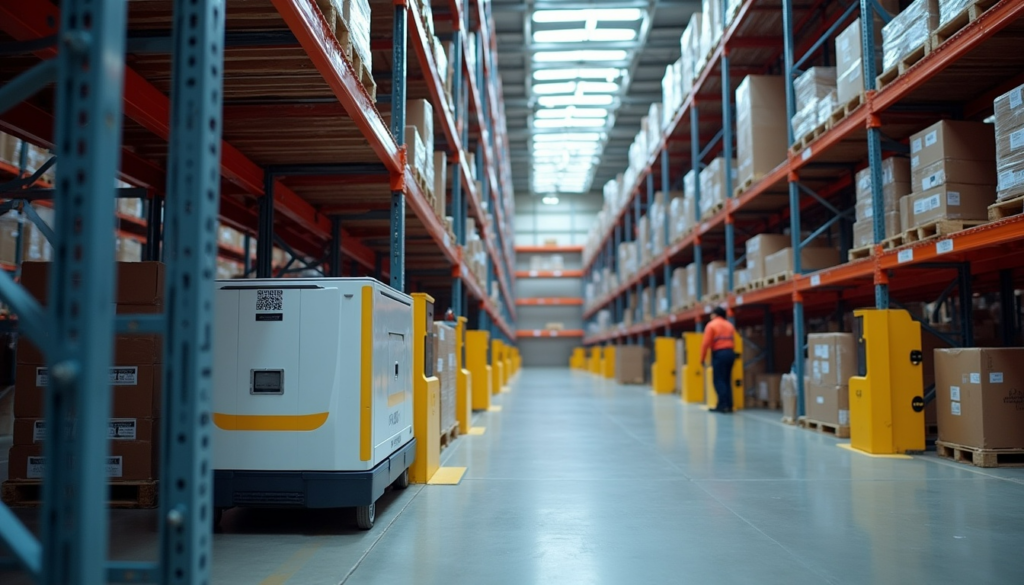
VNA racking is a high density pallet racking system built around dramatically narrower aisles than standard selective pallet racking. Where a conventional warehouse using a reach truck typically needs aisles of around 3 to 4 metres for safe manoeuvring, VNA systems reduce that to as little as 1.5 to 2 metres.
That narrower aisle width is the entire point of the system. Since aisles typically make up a large share of total warehouse floor area, shrinking them by roughly half frees up substantially more space for actual racking and storage, without needing to extend the building or move to a bigger site.
Businesses that switch to VNA racking commonly see storage capacity increase by somewhere in the region of 30 to 50 percent within the same footprint, depending on the layout and racking height involved. For a warehouse that is already at capacity but not ready to relocate or expand, that kind of increase can be the difference between renting additional space and simply reorganising the one you already have.
How VNA Racking Works
VNA racking uses the same basic structure as selective pallet racking, upright frames and horizontal beams creating individual pallet positions, so every pallet remains directly accessible rather than stacked several deep as with drive in or shuttle systems. The key difference is that the aisles between rows are built specifically for specialised narrow aisle equipment rather than standard forklifts.
Because standard forklifts and reach trucks cannot safely turn or lift within such a narrow aisle, VNA systems are operated with specialised equipment, typically turret trucks or articulated reach trucks, that can lift and rotate loads within the confined space. Many VNA installations also use guide rails or wire guidance systems set into the floor, which keep the equipment precisely aligned as it moves down the aisle, both improving safety and protecting the racking from collision damage.
Because the equipment and guidance systems involved are more specialised than a standard forklift setup, VNA racking also tends to suit taller warehouses well, since the same narrow aisle equipment can often reach considerable heights, adding vertical storage gains on top of the aisle space already saved.
Key Benefits of VNA Racking
Significant space savings. Narrower aisles are the core benefit, freeing up floor space that can be converted directly into additional storage without expanding the building.
Full pallet accessibility. Unlike drive in or pallet shuttle racking, which sacrifice some accessibility for density, VNA racking keeps every pallet position individually accessible, since it is fundamentally an adapted version of selective pallet racking.
Strong fit for tall warehouses. VNA equipment is often designed to reach considerable heights, which pairs well with the vertical storage gains a business is usually also trying to capture.
Improved picking efficiency. Guided equipment moving precisely down a narrow aisle can reduce travel time between pallet positions compared to wider, less structured layouts.
Reduced racking damage. Guide rail or wire guided systems keep equipment aligned within the aisle, which helps reduce the collision damage that can occur with standard forklifts operating more freely.
Is VNA Racking Right for Your Warehouse?
VNA racking tends to make the most sense for businesses facing a specific combination of constraints: limited floor space, a wide range of SKUs that need individual pallet accessibility, and a warehouse tall enough to make the most of vertical storage gains alongside the aisle savings.
It is generally not the right fit for every operation. The specialised equipment, guide systems, and precise floor requirements involved mean VNA racking carries a higher upfront investment than standard selective pallet racking, so it tends to suit businesses where space constraints are a genuine bottleneck rather than a minor inconvenience. Businesses with more available floor space, or those storing very large volumes of a small number of SKUs, may find selective pallet racking, drive in racking, or pallet shuttle racking a better fit instead.
Because VNA installations depend heavily on precise floor levelling, aisle alignment, and equipment compatibility, getting the design right from the outset matters more with this system than with most other racking types. Krost Shelving & Racking is one of South Africa and Africa’s leading manufacturers of VNA racking, designing every system around your actual building dimensions, floor condition, and stock profile rather than a generic layout.
Frequently Asked Questions
How much floor space can VNA racking actually save?
Aisle widths typically shrink from around 3 to 4 metres down to 1.5 to 2 metres, and businesses that switch commonly report overall storage capacity increases of around 30 to 50 percent within the same footprint, though the exact figure depends on layout and height.
Do I need special equipment to use VNA racking?
Yes. Standard forklifts and reach trucks cannot safely operate in the narrow aisles VNA racking uses. Specialised turret trucks or articulated reach trucks, often paired with guide rail or wire guidance systems, are required.
Is VNA racking suitable for every warehouse?
Not necessarily. It tends to suit warehouses facing genuine space constraints, particularly taller buildings where vertical storage gains add to the aisle savings. Businesses with ample floor space may not see enough benefit to justify the additional investment.
Does VNA racking cost more than standard pallet racking?
Generally yes, mainly due to the specialised handling equipment, guide systems, and precise floor requirements involved, though the space savings often justify the additional cost for businesses genuinely constrained on floor area.
Can existing selective pallet racking be converted to VNA racking?
In some cases the racking structure itself can be adapted, but converting existing aisles to VNA standards usually requires floor levelling work and new guide systems, so it is best assessed on a site by site basis.
Does Krost design and install VNA racking?
Yes. Krost Shelving & Racking designs, manufactures, and installs VNA racking systems in house, tailored to your building’s dimensions, floor condition, and stock profile.
Final Thoughts
VNA racking exists to solve a very specific problem: making the most of limited floor space without giving up the pallet accessibility that many businesses genuinely need. For warehouses where space is the real constraint, the aisle savings alone can unlock capacity that would otherwise mean relocating or expanding.
For a full breakdown of every racking type and how to choose between them, see our complete guide to racking systems. You can also view our VNA Racking range directly, or get in touch with our team for a free site assessment to see how much capacity VNA racking could unlock in your space.

