
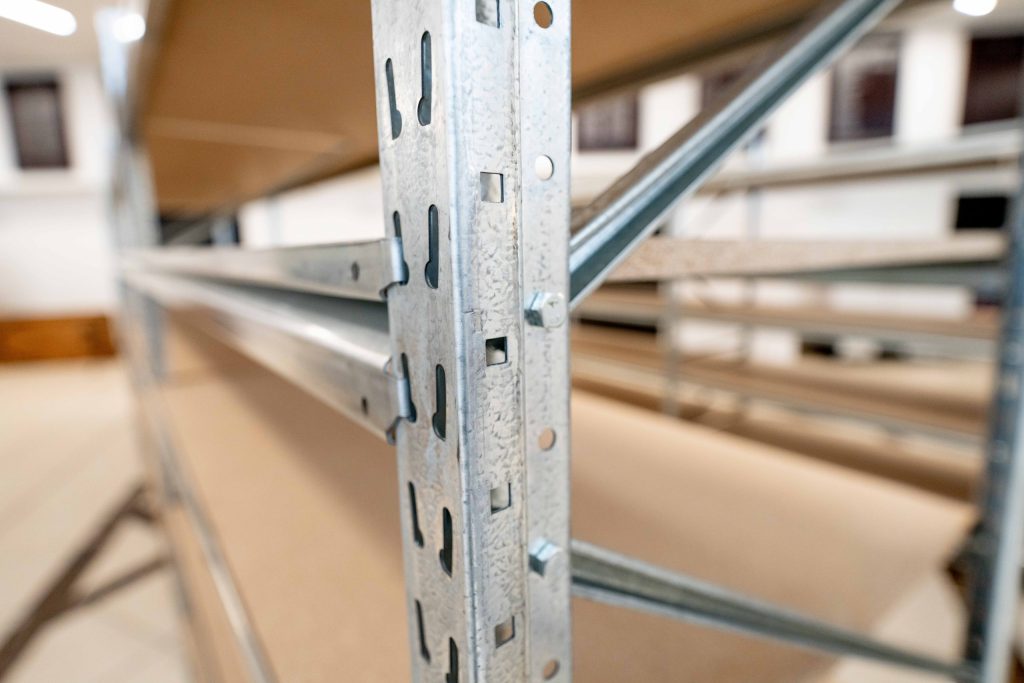
Deciding between selective storage vs. long-span racking comes down to how you handle your goods and what kind of access you need. Selective storage racking is best when speed and organisation matter most. You can reach each pallet directly, which makes loading and unloading quick and easy, ideal for fast-moving items and stock with high turnover. This setup boosts efficiency without complicating your workflow if you’re dealing with lots of different products and constant daily movement.
In contrast, long-span racking suits bulkier items that don’t sit neatly on pallets. Think tools, boxes or oddly shaped goods. This option relies on solid, open shelves made for hand picking and manual sorting. It’s a go-to when forklifts aren’t involved and you’re aiming to maximise space on a lower level.
Key Differences Between Selective Storage vs. Long-Span Racking
Looking at the differences between selective storage and long-span racking, one clearly prioritises access and speed, while the other focuses on shelf strength and flexible use. Selective storage works better for taller racking systems moved by forklifts, where every pallet needs easy reach. On the other hand, long-span racking operates best for team members doing manual picking. It’s strong, easy to adjust, and keeps things tidy without relying on big equipment.
The contrast is obvious when selective storage and long-span racking are compared. One gives priority to quick rotation and single-item access, while the other shines when you’re storing parts or irregular items that don’t need heavy machinery to handle.
Using Selective Storage vs. Long-Span Racking Together
Pairing selective storage vs. long-span racking can offer the best of both worlds. We regularly design storage systems that use selective storage up high for full pallets and long-span racking underneath for smaller items handled by hand. This layered layout makes better use of warehouse height while keeping pick zones clear and practical.
It’s easy to see how combining both styles gives better access and saves space by having selective storage and long-span racking compared in action. It speeds up picking times and helps avoid cluttered aisles. The two approaches balance each other out: one storing bulk loads, the other keeping everyday stock within reach.
Understanding the differences between selective storage and long-span racking allows you to set up storage that fits your space and activity levels. At Krost Shelving & Racking, we help you create smart solutions that support your team, save time, and keep your stock in check.
Selective Storage vs. Long-Span Racking: Making the Right Fit for Your Warehouse
It all boils down to how your warehouse operates when it comes to choosing between selective storage vs. long-span racking. Selective storage might suit you better if your inventory turns over quickly or includes a range of different items. It offers straightforward access to every pallet, which means forklifts can move without delays and items are easier to check and manage. Stock takes are quicker, and everything has a designated spot, ideal for fast-moving environments where order matters.
Key Differences Between Selective Storage and Long-Span Racking
The main differences between selective storage and long-span racking revolve around handling and item type. Selective storage works best for palletised goods that need moving often. Long-span racking, on the other hand, is great for items you pick by hand—like spare parts, boxes, or irregular-shaped stock that wouldn’t suit pallets. It takes advantage of lower-level floor space and is more flexible when your goods are varied in size.
Selective Storage and Long-Span Racking Compared in Real-World Use
We’ve seen warehouses get the most out of both by combining the systems. Selective storage at upper levels helps manage pallet inventory, while long-span racking below makes hand-picking cartons or gear straightforward. In that way, selective storage and long-span racking compared side by side reveals they’re not in competition, they complement each other. One handles turnover, while the other brings practical access to bulkier or loose goods.
Should You Choose Selective Storage vs. Long-Span Racking?
Our suggestion? Think about how your space is used and what your team needs every day. Selective storage keeps things flowing for businesses that regularly shift products in and out. Long-span racking is a winner when stock isn’t uniform or arrives in non-palletised form. Comparing selective storage vs. long-span racking isn’t about picking a single winner but choosing what fits your mix of stock types and timing.
At Krost Shelving & Racking, we help custom-make each setup to match your space and workflow, from top-level racking to everyday hand-pick access. Understanding the differences between selective storage and long-span racking lets you build a system that makes practical, everyday sense, whether you’re storing boxes, parts, or full pallets.
Selective Storage vs. Long-Span Racking: What Fits Your Workflow?
The right fit depends on how your team moves, picks, and stores items day to day when it comes to selective storage vs. long-span racking. At Krost Shelving & Racking, we guide you through your space to spot what works best without any guesswork. There’s no single-solution rule; it’s all about matching the system to your workflow, whether you’re handling pallets, boxes, or a mix of both.
Selective storage is a clear winner if speed and flexibility matter most. It gives direct access to every pallet, helping you rotate stock quickly and keep items easy to find. Perfect for places with high turnover or mixed products, this system saves time and helps maintain order. On the flip side, long-span racking comes in handy for larger or oddly shaped stock, especially when those items are picked by hand. It fits where forklifts don’t reach and works well on lower levels for fast access to everyday supplies.
Have an e-commerce warehouse? Find the right solution by reading: Best Storage Racks for an e-Commerce Warehouse.
Key Differences Between Selective Storage and Long-Span Racking
The most obvious differences between selective storage and long-span racking show up in how each is used. Selective storage suits operations with forklifts and pallet handling, while long-span racking supports hands-on retrieval of loose goods. One serves height and speed, the other stretches your lower shelving space. That’s why we frequently combine both: stacking long-span units at ground level while placing selective storage above for heavier items or full pallets.
We improve both reach and rhythm inside the warehouse by using selective storage and long-span racking compared side by side. We look at how your teams move, what they access most, and how regularly the stock turns over. That way, no centimetre goes to waste, and every product has a logical spot.
Selective Storage vs. Long-Span Racking: A Blended Setup That Works
We’ve found that mixing selective storage vs. long-span racking delivers the best results. For example, if you’re storing bulky boxes or loose tools, long-span racking lets you keep things neat and reachable. Selective storage makes access smooth and predictable if other items move quickly and need specific tracking. Placing them together turns your warehouse into a seamless operation where storage serves your flow, not the other way around.
Selective storage and long-span racking offer both flexibility and control when they are combined with purpose. We design systems around your existing needs, not standard templates. That’s why our clients across South Africa trust us to provide solutions that feel built just for them, because they are.
Selective Storage and Long-Span Racking Compared in Real Conditions
Seeing selective storage and long-span racking compared in real warehouses tells us that the best setups always come from understanding what works on the floor, not just on paper. We take inventory size, pick frequency, and storage goals into account, then build around them. Rather than locking you into one system, we help you make smarter use of the systems together — stacking up where needed, spreading out where it counts.
So whether it’s about restocking fast or safely storing awkward goods, let’s find the right mix. With our experience, we make selective storage vs. long-span racking a choice you don’t have to make alone.
Experience Tailored Storage Solutions with Krost Shelving & Racking
Navigating the decision between selective storage and long-span racking doesn’t have to be a solitary task. At Krost Shelving & Racking, our expertise is in crafting bespoke storage systems that precisely match your operational needs. We combine selective storage and long-span racking to enhance efficiency, accessibility, and orderliness by understanding the unique dynamics of your warehouse. We ensure every centimetre of your space is optimised for productivity, whether you’re moving high-turnover pallets or storing irregular-shaped stock.
Ready to transform your warehouse storage without the guesswork? Contact us at Krost Shelving & Racking to explore how our tailored solutions can seamlessly fit into your existing workflow while keeping your warehouse operations running like a well-oiled machine.

