
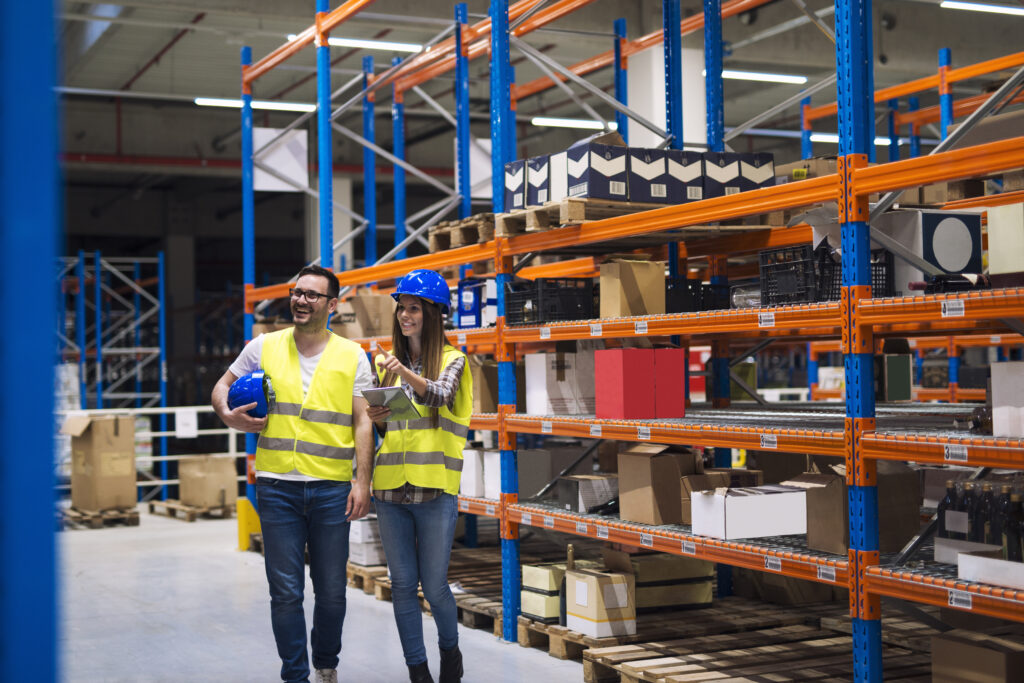
Keypoint Summary
- Racking is built for heavier, palletised loads handled with a forklift, while shelving is built for lighter goods loaded by hand.
- Racking suits warehouses and distribution centres, while shelving suits stockrooms, retail spaces, archives, and parts stores.
- Many businesses use both together, racking for bulk pallet storage and shelving for smaller, frequently accessed items.
- Choosing between them comes down to load weight, how goods are handled, and how often stock is accessed.
- Krost Shelving & Racking is one of South Africa and Africa’s leading manufacturers of both racking and shelving, so either system can be tailored to your space.
If you are setting up or reorganising a warehouse, stockroom, or storage area, you have probably come across both “racking” and “shelving” used to describe storage systems. They sound similar, and in casual conversation people often use the terms interchangeably, but they are actually built for different jobs. Choosing the wrong one for your stock can mean wasted space, slower picking, or in some cases a genuine safety risk. This guide walks through what separates racking from shelving, when each one makes sense, and how to decide which your business actually needs.
What Is Racking?
Racking is a structural steel storage system designed to hold palletised or bulk goods, usually handled with a forklift or reach truck. It is built from tall upright frames and horizontal beams, creating several storage levels that make full use of a building’s height rather than just its floor space.
Racking systems come in several types, each suited to different loads and warehouse layouts. Selective pallet racking gives direct access to every pallet. Drive-in racking packs pallets several deep for high-density storage. Cantilever racking handles long or awkward items like timber and steel. There are others too, each solving a slightly different storage problem, but they all share the same core purpose: storing heavy, palletised stock safely and efficiently.
Because racking is designed to carry serious weight, often several metres in the air, it needs to be installed correctly and inspected regularly. It is a long-term structural investment rather than a piece of furniture, and treating it that way matters for safety.
What Is Shelving?
Shelving is a lighter storage system designed for goods that are loaded and unloaded by hand rather than by forklift. It typically consists of upright frames with shelves or panels fitted between them, creating fixed or adjustable levels for storing smaller items.
Shelving comes in several forms too. Bolted and rivet shelving are common general-purpose options for stockrooms and storerooms. Gondola shelving is the retail-style shelving you see in shops, designed for product display as much as storage. Mobile shelving runs on tracks so entire rows can shift to open an aisle only where needed, which is useful for archives and record storage where space is tight.
Shelving is generally quicker and cheaper to install than racking, and it is far more common in environments where staff are picking individual items by hand rather than moving full pallets.
The Key Differences Between Racking and Shelving
Load capacity. Racking is built to carry heavy, palletised loads, often measured in tonnes per level. Shelving is built for lighter loads, generally items that a person can lift and place by hand.
Handling method. Racking is designed around forklifts and reach trucks moving pallets in and out. Shelving is designed around people picking items directly off the shelf.
Typical environment. Racking is the default choice for warehouses, distribution centres, and industrial storage. Shelving is more common in retail stockrooms, offices, archives, parts counters, and smaller storage rooms.
Structure and installation. Racking uses heavier gauge steel and requires more careful design around load ratings and floor anchoring. Shelving is lighter, generally faster to install, and easier to reconfigure on the fly.
Access and picking speed. Shelving tends to suit fast, frequent, small quantity picking. Racking suits bulk storage and movement, though certain racking types, like catwalk or pick face racking, are designed to combine both.
Do You Need Racking, Shelving, or Both?
For most businesses, the answer depends on what is actually being stored and how it moves through the space.
If you are storing full pallets, bulky items, or large volumes of the same product, and moving them with a forklift, racking is almost certainly the right fit. This applies to most warehouses, distribution centres, and manufacturing facilities.
If you are storing smaller items that staff pick by hand, whether that is retail stock, spare parts, documents, or general stores inventory, shelving is usually the better and more cost-effective choice.
Many operations genuinely need both. A common setup is racking for bulk pallet storage in the main warehouse area, with shelving used for a smaller picking zone, parts store, or stockroom nearby. Getting this combination right often comes down to a proper site assessment rather than guesswork: someone experienced looking at your actual stock, space, and workflow, and recommending the right mix.
This is where working with an established manufacturer helps. Krost Shelving & Racking is one of South Africa and Africa’s leading manufacturers of both racking and shelving, designing and building every system in house rather than reselling generic products, which means whichever combination you need can be built around your actual space and stock rather than fitted to an off the shelf template.
Frequently Asked Questions
Can racking and shelving be used in the same warehouse?
Yes, and it is common. Many businesses use racking for bulk pallet storage and shelving for a separate picking zone, parts store, or smaller stockroom within the same facility.
Is shelving cheaper than racking?
Generally yes, since shelving uses lighter materials and simpler structures. However, cost should be weighed against what you are actually storing. Using shelving for loads it is not rated for is a safety risk, not a saving.
Which is better for a retail stockroom, racking or shelving?
Shelving is usually the better fit for a retail stockroom, since stock is typically hand-picked in smaller quantities rather than moved by forklift. Racking tends to be reserved for larger back-of-house or distribution areas.
Can shelving hold pallets?
Some heavy-duty shelving systems can hold light pallets, but standard shelving is not designed for palletised loads the way racking is. If you are regularly handling full pallets, racking is the appropriate system.
How do I know if my current storage setup is the right one?
The clearest signs of a mismatch are struggling to fit stock in the space you have, slow picking, or difficulty moving pallets safely. A site assessment from an experienced manufacturer can confirm whether racking, shelving, or a combination of both would suit your operation better.
Does Krost supply both racking and shelving?
Yes. Krost Shelving & Racking manufactures both racking and shelving systems in-house, along with mezzanine floors and custom storage solutions, so businesses that need a combination of both can get everything designed and installed as one coordinated system.
Final Thoughts
Racking and shelving both solve the same broad problem, organising and storing stock, but they are built for genuinely different jobs. Getting the choice right, or the right combination of both, has a real impact on how efficiently your space works and how safely your stock is stored.
For a full breakdown of every racking type available, see our complete guide to racking systems. You can also browse the full range of racking systems or shelving systems on our site, or get in touch with our team for a free site assessment tailored to your space and stock.

