
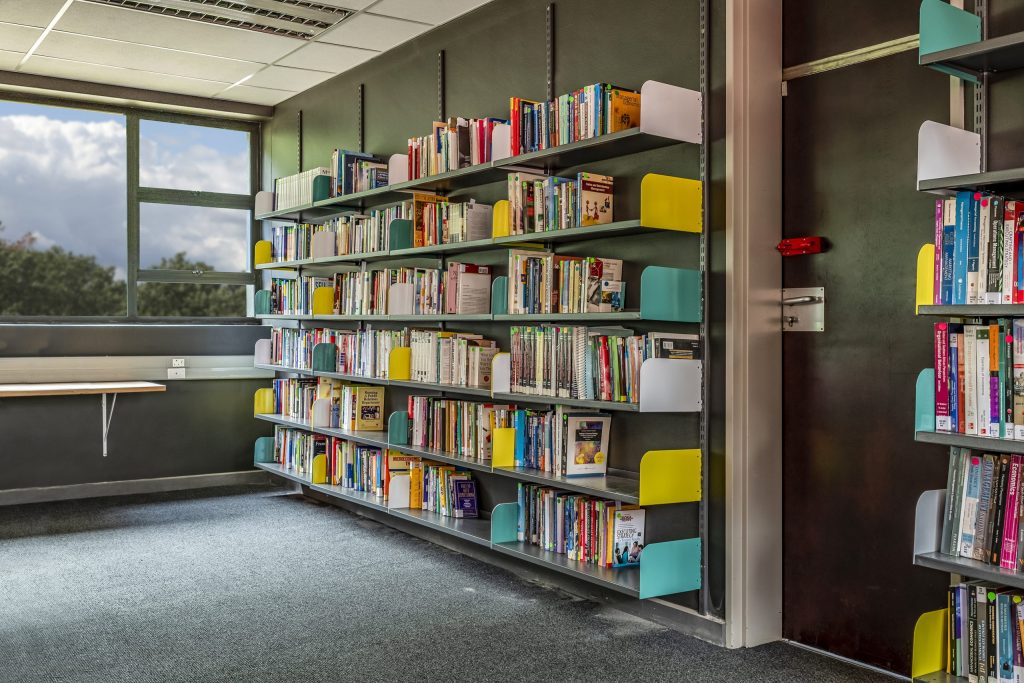
When thinking about warehouse vs. library shelving, it helps to look at how each one is built and where it works best. These shelving systems are used in very different environments, and that shows in their design. In busy warehouses, shelves are all about muscle. They’re built to handle heavy loads like tools, crates, or pallets. On the flip side, library shelving is more suited to storing lighter items like books or binders. It’s designed to make things easy to see and grab, especially in quieter spaces like schools or offices.
Comparing Design: Warehouse vs. Library Shelving
Looking closer at warehouse vs. library shelving, their construction tells you everything you need to know. Warehouse shelves are typically metal and made for strength. They often come with adjustable levels and can be bolted for extra safety. Because they support a lot of weight, they focus more on performance than appearance.
Library shelving, however, leans into style. These shelves are made to fit into neat, well-organised spaces. Soft finishes and clean lines help them blend into their surroundings. And since they’re not holding tons of weight, the focus is on visibility and comfort. People should be able to browse a shelf without digging or stretching.
Key Differences: Warehouse vs. Library Shelving in Action
When warehouse and library shelving differences are compared side by side, it’s clear each is made for a specific job. Warehouse racks are perfect for industrial setups where safe and strong storage is a must. They maximise vertical space and can be reconfigured when needed. In contrast, library systems need to be easy on the eyes and on your back—accessible, open, and welcoming.
People often ask if these shelves can be used interchangeably, but when warehouse and library shelving differences are truly considered, the answer becomes clear. Weight limits, layout, and user needs all play a role. If you’re deciding between the two, consider how often items will be handled, how much space you have, and the kind of look you want.
Warehouse and Library Shelving Compared: Function Meets Form
With warehouse and library shelving compared side by side, functionality plays a huge role. Industrial shelves are all about getting the job done. They help manage big inventories efficiently and safely. But library shelving brings its own strengths, offering a tidy, user-friendly setup.
Whether you’re outfitting a warehouse or refreshing a reading room, knowing your options matters. When warehouse and library shelving differences are front and centre, it’s easier to choose what fits—not just your space, but your everyday needs too.
Warehouse vs. Library Shelving: Design and Strength Compared
When exploring warehouse vs. library shelving, one of the main things that stands out is how differently each type is built. Warehouse shelving is made for strength. It’s designed to handle heavy items and busy movement—machinery, bulk goods, nonstop activity. You’ll often see features like bolted frames and extra braces that keep everything safe and stable. These shelves don’t just look strong—they’re built not to tip or bend, no matter how heavy the load.
In contrast, library shelving doesn’t face the same demands. It’s used by people, not forklifts. It holds books, not crates or pallets. Because of that, it focuses more on easy reach and smooth finish rather than tough reinforcements. You rarely see bolts or ties on library shelves because they’re not usually needed.
Warehouse vs. Library Shelving: Adjustability and Flexibility
Another difference in warehouse vs. library shelving is how flexible each system is. In warehouse setups, shelves are built to change with your needs. From boltless to bolted options like those by Krost, it’s easy to move, remove, or add shelves as inventory shifts. This helps businesses save space and adapt as they grow.
Library shelving has some flexibility but is more limited. Most library units have fixed heights meant for books and lightweight items. However, some locations use mobile options—wheeled shelving that can slide apart when needed. It’s a practical space-saver, especially in smaller rooms or archive sections.
This adjustability is one of the key points in how warehouse and library shelving are compared. While both offer smart storage solutions, they cater to very different needs.
Warehouse vs. Library Shelving: How Space is Used
In looking at warehouse and library shelving differences, how space is used plays a big role. Warehouses are focused on maximising every inch. Shelving is often arranged to reach high and spread wide. It needs to fit tight rows of goods while leaving space for machines to move safely. Built-in anchors and stacked configurations help get the most out of available floor space.
Libraries, on the other hand, want people to feel welcome and safe. The shelving is shallower by design, so nothing gets lost in the back. The goal is clarity and comfort—items should be easy to find, easy to reach, and displayed neatly.
So when warehouse and library shelving are compared, the difference comes back to purpose. One handles weight and workflow; the other creates a calm, organized space. Both are important—but they’re built for totally different roles.
Understanding Budget and Application
When considering warehouse vs. library shelving, one of the biggest deciding factors is how the shelving will function in your space over time. Warehouse shelving tends to be more cost-effective, especially if you need to store heavy or bulky items. Built for durability, it handles rough use and rarely needs replacement, even in high-traffic environments. It also adjusts easily to match growing stock or redesigned floor plans, offering real flexibility.
In contrast, library shelving is often more refined in appearance, designed to enhance spaces like offices, schools, or public areas. It typically comes with a higher upfront cost due to its finishes and design features. But that investment pays off when user experience matters—whether it’s helping people browse, find materials quickly, or feel at ease in a calm, organized setting.
Practical Use in Real-World Settings
The best way to approach warehouse vs. library shelving is to start with how each option is used in daily operations. Warehouse shelves are optimized for storing larger items and supporting heavy loads, often arranged to work with forklifts and fast movement. They’re designed with safety and access efficiency in mind.
On the other hand, library shelving focuses on accessibility for people, not machinery. The design supports easy browsing, well-organized displays, and a pleasant atmosphere—key elements in schools, libraries, and community areas. When warehouse and library shelving differences are taken into account, the best match becomes easier to identify based on your priorities.
Flexibility and Long-Term Value
Another thing to keep in mind when exploring warehouse vs. library shelving is long-term adaptability. Warehouse shelving often uses adjustable modules, which means you can change shelf heights or add sections as storage needs shift. This adaptability is ideal for businesses that see seasonal changes or rapid growth.
Library shelving can also be flexible but usually to a lesser degree. Some systems include movable units for changing layouts, though they focus more on visibility and user comfort. When warehouse and library shelving compared side by side, the differences are clear—not only in form but in long-term function.
Conclusion
Deciding between warehouse and library shelving isn’t just about picking a style—it’s about choosing a system that complements the demands and aesthetics of your environment. Each type of shelving has its strengths, from the robust adaptability of industrial racking to the inviting, organised appeal of library displays.
To make the best decision, consider how each option aligns with your functional requirements and aesthetic goals. If you’re ready to explore tailored shelving solutions that meet your unique needs, our team at Krost Shelving & Racking is here to help. Contact us today to discover the perfect shelving system for your space!

