
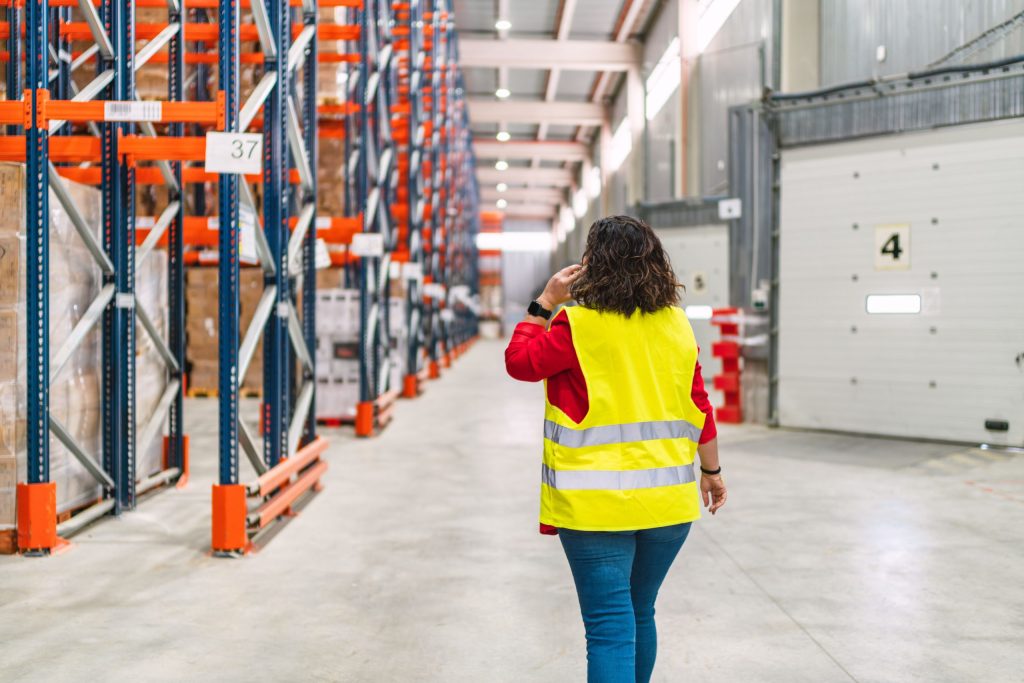
Selecting the right racking system is crucial for optimising warehouse efficiency, safety, and space. When comparing push-back vs. drive-through racking, understanding their operational differences, benefits, and trade-offs helps warehouse managers make informed decisions. Both systems maximise storage density, but their approaches to inventory management, accessibility, and safety vary significantly. At Krost Shelving & Racking, we specialise in tailored racking solutions in South Africa. This guide explores the differences between push-back and drive-through racking, helping you choose the system that aligns with your warehouse goals.
What Are Push-Back and Drive-Through Racking Systems?
Push-Back Racking
Push-back racking uses inclined rails and nested carts to store pallets 2-5 positions deep. When a new pallet is loaded from the front, it pushes existing pallets backward. Unloading also occurs from the front, following a Last-In-First-Out (LIFO) system. Forklifts never enter the structure, reducing collision risks and speeding up operations. This makes push-back ideal for warehouses handling diverse stock-keeping units (SKUs) with regular turnover.
You may be interested in: Push Back Racking Cost Guide for SA Businesses
Drive-Through Racking
Drive-through racking allows forklifts to enter the structure to place and retrieve pallets, stored up to 20 pallets deep in continuous lanes. Pallets are loaded from one end and retrieved from the other, supporting a First-In-First-Out (FIFO) system. This setup suits high-volume storage of uniform products, such as perishable or time-sensitive goods, but requires careful forklift operation to avoid accidents.
For more on FIFO systems, read: Drive-Through vs. Carton Live Racking: FIFO Showdown
Key Differences Between Push-Back and Drive-Through Racking
When push-back and drive-through racking are compared, their distinct designs cater to different warehouse priorities. Here’s a breakdown of the primary differences:
- Inventory Flow
- Push-Back: Operates on a LIFO basis, ideal for non-perishable goods or fast-moving stock where strict rotation isn’t critical.
- Drive-Through: Uses a FIFO system, essential for industries like food or pharmaceuticals where stock rotation ensures freshness or compliance with expiration dates.
- Storage Density
- Push-Back: Increases pallet capacity by 14–25% compared to drive-through systems by eliminating internal forklift lanes, optimising vertical and horizontal space.
- Drive-Through: Maximises depth for high-volume, single-SKU storage, reducing aisle space but limiting flexibility to one product type per lane.
- Accessibility
- Push-Back: Offers faster pallet access since forklifts operate solely from the front aisle, ideal for varied SKUs and frequent picking.
- Drive-Through: Provides deep storage but slower access due to forklifts entering lanes, with limited selectivity as each lane holds one SKU.
- Safety
- Push-Back: Reduces collision risks as forklifts stay outside the structure, enhancing safety and lowering equipment wear.
- Drive-Through: Increases accident potential due to forklift navigation within racks, requiring skilled operators and robust training.
Benefits of Push-Back Racking
Push-back racking excels in warehouses prioritising flexibility and speed:
- Versatile SKU Management: Supports multiple SKUs per aisle, accommodating diverse product ranges.
- Faster Operations: Front-only loading/unloading minimises forklift travel, boosting efficiency and reducing labour costs.
- Enhanced Safety: Eliminates the need for forklifts to enter the structure, lowering the risk of collisions or damage.
- Space Efficiency: Stores more pallets in less floor space compared to traditional selective racking, ideal for compact warehouses.
Push-back systems are perfect for businesses with varied inventory and high turnover, such as retail distribution or manufacturing with multiple product lines.
Benefits of Drive-Through Racking
Drive-through racking is designed for high-density storage of uniform goods:
- Maximum Storage Depth: Accommodates up to 20 pallets per lane, ideal for bulk storage of single SKUs like raw materials or perishables.
- FIFO Compliance: Ensures older stock is retrieved first, critical for time-sensitive inventory.
- Reduced Aisle Space: Fewer aisles maximise floor space, making it suitable for warehouses with limited square footage.
This system suits industries like cold storage or wholesale, where large quantities of similar products need efficient, high-volume storage.
Push-Back and Drive-Through Racking Compared: Which Fits Your Needs?
Choosing between push-back vs. drive-through racking depends on your warehouse’s layout, inventory type, and operational goals. Here’s a side-by-side comparison to guide your decision:
- Product Variety:
- Push-Back: Best for warehouses with diverse SKUs, allowing multiple product types per aisle.
- Drive-Through: Suited for uniform products, with each lane dedicated to a single SKU.
- Stock Turnover:
- Push-Back: Ideal for fast-moving goods where LIFO works efficiently.
- Drive-Through: Perfect for slower-moving or perishable goods requiring FIFO rotation.
- Space Constraints:
- Push-Back: Optimises vertical and horizontal space for moderate-depth storage.
- Drive-Through: Maximises deep storage, reducing aisle requirements for high-volume needs.
- Operational Speed:
- Push-Back: Faster pallet handling due to front-only access.
- Drive-Through: Slower due to forklift navigation within racks.
For example, a warehouse managing electronics with frequent restocking might choose push-back for its speed and flexibility. Conversely, a food distributor storing large batches of canned goods might opt for drive-through to ensure FIFO rotation and maximise capacity.
Safety and Cost Considerations
Safety and long-term costs are critical when evaluating push-back and drive-through racking compared:
- Push-Back:
- Safety: Reduces risks by keeping forklifts outside the structure, minimising collisions and equipment damage.
- Cost: Higher initial investment due to carts and rails, but lower labour and maintenance costs from faster operations and less wear.
- Drive-Through:
- Safety: Requires skilled operators and robust training to navigate racks safely, with higher risks of damage to racks or goods.
- Cost: Lower upfront costs but potentially higher maintenance and training expenses due to complex forklift operations.
Krost Shelving & Racking ensures all systems meet strict industry safety standards, providing durable, reliable solutions tailored to your warehouse.
How to Choose the Right System for Your Warehouse
To select between push-back vs. drive-through racking, consider these factors:
- Inventory Type: Choose push-back for diverse, fast-moving SKUs; opt for drive-through for uniform, high-volume stock.
- Space Availability: Push-back suits compact spaces with varied inventory; drive-through maximizes depth in larger warehouses with fewer SKUs.
- Operational Goals: Prioritize speed and safety with push-back or maximize storage capacity with drive-through.
- Budget: Balance initial costs with long-term savings from efficiency, maintenance, and training needs.
Consulting with experts like Krost Shelving & Racking can help you assess your warehouse layout and design a system that optimizes space, safety, and productivity.
FAQ: Push-Back vs. Drive-Through Racking
What’s the main difference between push-back and drive-through racking?
Push-back uses a LIFO system with front-only access, ideal for varied SKUs and faster operations. Drive-through uses a FIFO system, with forklifts entering racks for deep, single-SKU storage.
Which is safer: push-back or drive-through racking?
Push-back is generally safer as forklifts don’t enter the structure, reducing collision risks. Drive-through requires careful forklift navigation, increasing training needs.
When should I choose push-back racking?
Choose push-back for warehouses with diverse products, frequent turnover, and a focus on speed and safety. It’s ideal for retail or manufacturing with multiple SKUs.
When is drive-through racking the better option?
Drive-through suits high-volume, single-SKU storage, especially for perishables or time-sensitive goods requiring FIFO rotation, like in food or wholesale industries.
Can Krost customise racking solutions?
Yes, Krost Shelving & Racking offers tailored designs to match your warehouse’s space, inventory, and operational needs.
Conclusion
Choosing between push-back vs. drive-through racking is a strategic decision that impacts warehouse efficiency, safety, and space utilisation. Push-back racking offers flexibility, speed, and safety for diverse, fast-moving inventory, while drive-through racking maximises storage for high-volume, uniform goods with FIFO needs. By understanding the differences between push-back and drive-through racking, you can align your choice with your operational goals. At Krost Shelving & Racking, our team provides expert guidance and custom solutions to optimise your warehouse. Contact us today to design a racking system that enhances productivity and streamlines your operations.

