
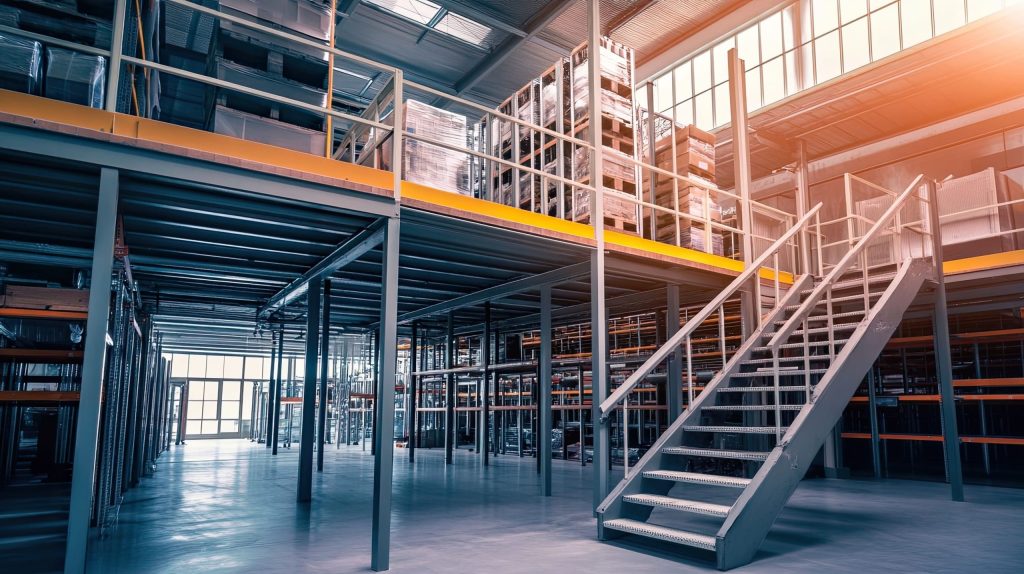
Understanding the core differences between structural mezzanine vs. drive-in racking sets the foundation for choosing the right system. A structural mezzanine adds a raised floor level, providing usable space above your existing floor without expanding outward. This makes it great for storing goods, setting up office areas, or even light assembly stations. It’s built to handle hefty loads and can easily evolve with changes in your business.
On the other hand, drive-in racking is all about deep pallet storage. Instead of walkways and wide aisles, this system lets forklifts move directly into storage tunnels, placing pallets one behind the other. This saves floor space and boosts storage density, but it’s best for large quantities of similar items that don’t need frequent access.
By comparing structural mezzanine and drive-in racking, you’ll see that each setup offers major space-saving benefits—just in different ways. If you need flexibility and room for different tasks or goods, a mezzanine offers versatility. If speed and volume of bulk storage are your priority, drive-in racking may suit your setup better.
Space Use: Why Structural Mezzanine vs. Drive-in Racking Matters
When evaluating structural mezzanine vs. drive-in racking, think about how you use your space. Mezzanines give you a new level inside your warehouse—ideal for businesses that are growing or diversifying. You won’t lose ground space, and instead of building out, you build up.
Drive-in racking, however, keeps everything at floor level but packs items tightly together. It works well if your stock rotates slowly and you handle it in large volumes. Think freezer storage or bulk product warehouses—anywhere last-in, first-out inventory works.
Comparing structural mezzanine and drive-in racking shows how each solution suits different routines. The right choice often comes down to how much access you need to your items and how often you’re loading or unloading stock.
Making the Right Choice: Structural Mezzanine vs. Drive-in Racking
The decision between structural mezzanine vs. drive-in racking should start with what your warehouse handles most. If your operations involve both people and goods—perhaps a mix of office, packing, and inventory—you’ll likely want the adaptability of a structural mezzanine. It’s a system that grows with you.
But if your focus is maximum product storage and quick turnover isn’t key, drive-in racking delivers more pallet positions per square metre. It reduces the number of aisles, allowing you to fill the space with more product.
Comparing structural mezzanine and drive-in racking helps you weigh the trade-offs. One offers varied functionality and long-term workspace flexibility. The other zeroes in on efficient, high-density storage. Both enhance warehouse design—it’s just a matter of your priorities.
Structural Mezzanine vs. Drive-In Racking: Key Functional Differences
Understanding the benefits of a structural mezzanine vs. drive-in racking system starts with how each one uses space. A structural mezzanine adds a free-standing floor inside your warehouse, ideal for storage, office setups, or small-scale production. It creates entirely new usable space without renovating or expanding the building footprint. On the other hand, drive-in racking stacks pallets deep and high, using forklifts to access goods from within the structure. This setup significantly reduces aisle space and increases storage density, especially when dealing with large quantities of similar items.
Comparing Structural Mezzanine and Drive-In Racking: Access and Flexibility
When comparing structural mezzanine and drive-in racking, one major difference is ease of access. A mezzanine allows for clear, walkable access to any item stored, making it easier to pick orders or rearrange inventory when needed. In contrast, drive-in racking uses a first-in, last-out method of retrieval. This suits operations with bulk pallet loads that need less frequent access. If your workflow needs flexibility and quick access to a range of items, a mezzanine may serve you better.
Structural Mezzanine vs. Drive-In Racking: Load Capacity and Inventory Type
With a focus on structural mezzanine vs. drive-in racking, it’s worth noting how they handle load types. A mezzanine supports a wider range of inventory, from heavy manual goods to light machinery, making it ideal for mixed-use environments. Its strong steel structure allows it to carry high load levels safely. Drive-in racking, however, is designed specifically for uniform palletised stock. It performs best when you store large volumes of the same product, needing minimal handling and consistent weight distribution.
Choosing Between Structural Mezzanine vs. Drive-In Racking Based on Your Needs
If you’re comparing structural mezzanine and drive-in racking to make a decision, think about your day-to-day operations. Do you need a workspace you can walk through, reconfigure, or even convert into offices? A mezzanine offers that freedom. Or are you aiming to pack as many pallets as possible into a tight area with minimal effort? Then drive-in racking gives you the best use of space. It mostly comes down to what matters more—flexibility and access, or high-density pallet storage.
Structural Mezzanine vs. Drive-in Racking: What Works Best for Your Space?
When looking at structural mezzanine vs. drive-in racking, the first thing to consider is what kind of stock you handle. If your warehouse deals with palletised goods that don’t move often, drive-in racking is a solid choice. It stores pallets tightly and works well for items rotated using the first-in, last-out method. However, if you’re after a flexible setup—maybe storing varied goods, using machines, or needing room for offices—a structural mezzanine adds a second level of useful space without major building changes.
By comparing structural mezzanine and drive-in racking from the start, you can focus on what works best for your day-to-day needs. Mezzanines offer easy access to stock and walking areas, ideal if you need to pick items quickly or mix uses across levels. In contrast, drive-in racking limits access to back pallets unless you move the ones in front—fine for static inventory, but not ideal for fast-moving goods.
Structural Mezzanine vs. Drive-in Racking in Access and Workflow
If quick access is important, the debate of structural mezzanine vs. drive-in racking leans in favour of the mezzanine setup. These platforms allow for walkways, shelving, and a smooth flow between work areas. That means more flexibility for teams on foot and better layout options. Drive-in racks excel at dense storage but are built mainly for forklift traffic in uniform pallet loading. That limits how you move around and reach your goods.
Comparing structural mezzanine and drive-in racking also helps spot future roadblocks. Mezzanines can be extended or reconfigured as your setup changes. They’re ideal if you expect your space needs to grow. On the flip side, expanding drive-in racking often means adding more of the same—more pallet lanes, more racking, but not necessarily more ways to use the space.
Structural Mezzanine vs. Drive-in Racking and Budget Considerations
Your budget plays a key role when comparing structural mezzanine and drive-in racking systems. Drive-in racking’s lower setup cost might be tempting up front. However, mezzanines increase usable square metres within your current building, which can save money over the long run. They’re especially helpful if you’re trying to avoid large-scale expansion.
In terms of overall value, structural mezzanine vs. drive-in racking comes down to use. For high-density pallet storage that rarely moves, drive-in racking is efficient. But for businesses needing movement, access, and room to grow, the mezzanine approach wins on flexibility.
By carefully comparing structural mezzanine and drive-in racking, it’s easier to align your investment with how your warehouse actually works—now and as it scales.
Unlock the Full Potential of Your Warehouse Space
Choosing between a structural mezzanine and drive-in racking is crucial to optimising your warehouse operations. Each offers distinct advantages tailored to different needs—be it versatile, multi-functional space or dense pallet storage. To find the perfect fit for your unique requirements, consider consulting industry experts who can guide you through the decision-making process.
Unlock the full potential of your warehouse with the ideal storage solution from Krost Shelving & Racking. Get a structural mezzanine or drive in racking quote and we’ll discuss how we can help transform your storage facilities into a more efficient and productive environment.

