
Key Point Summary
- Industrial storage techniques such as selective racking, vertical storage, and bulk racking help businesses maximise warehouse space and improve workflow efficiency.
- Shelving and racking systems tips like weight distribution and product categorisation reduce safety risks and minimise damage to inventory.
- Applying the right warehouse storage solutions ensures fast, organised access to stock — critical for high-turnover environments like retail and food distribution.
- Heavy-duty shelving units and bulk racking systems are essential for warehouses storing oversized, heavy, or irregularly shaped items securely.
- Pallet racking systems combined with FIFO principles and flow racking improve stock movement, reduce delays, and support better warehouse organisation.
Introduction
Warehouse storage can seem straightforward but is as variable as every industry’s business needs. Distribution centres may require compact pallet racking systems because their inventory contains many small, uniform items. Large operations may rely on bulk storage solutions that can store heavy equipment. Commercial buildings may need an office storage mechanism that makes accessibility and optimal use of space possible. Whatever the demand, companies must apply specific warehouse storage solutions to their shelving and racking systems that accommodate their operations.
This is where this article comes in handy. It outlines seven essential industrial storage techniques for businesses needing to store large amounts of stock effectively — along with practical shelving and racking systems tips to improve safety, accessibility, and efficiency.
7 Storage Techniques Using Industrial Shelving and Racking Systems
1. Accessibility Technique
Easy access to stored items is a primary goal for any warehouse storage solution setup. For businesses with frequent product turnover or items that need quick recovery, using selective racking systems is a constructive strategy that ensures employees can effortlessly access individual pallets without moving other items. Selective racking systems are most ideal for warehouse storage where products have different SKUs or sizes and require immediate access.
A well-organised layout that ensures aisles are wide enough for forklifts or manual handling equipment to navigate comfortably is a necessary warehouse organisation tip to improve accessibility across the entire facility.
2. Turnover (Movement Rate) Technique
Turnover-based racking is a fundamental industrial storage technique to manage high-turnover inventory. High-turnover goods should be stored in a manner that accommodates fast loading and unloading to reduce delays in stock movement. Businesses can optimise how products are stored and picked using flow racking systems or FIFO (First-In-First-Out) racking — one of the most reliable shelving and racking systems tips for fast-moving stock.
Food distribution centres or retail environments are great illustrations. Because their products must be cycled regularly, they can benefit from warehouse storage solutions that allow for smooth stock movement, guaranteeing that items are always ready for dispatch.
3. Product Technique
The product technique focuses on organising shelving and racking systems according to the type of product being stored. Operations with diverse inventory can streamline both storage and retrieval processes by grouping products by their characteristics — size, shape, weight, or fragility. Heavy or bulky items may require bulk storage racking systems, while smaller items may fit best in compact shelving or pallet racking systems that allow efficient use of vertical space.
Categorising items based on their storage requirements minimises damage risk and improves picking efficiency — crucial for lowering operational costs and improving productivity across any warehouse.
4. Bulk Items Technique
Warehouses dealing with large, heavy, or irregularly shaped items require dedicated bulk storage racking as part of their industrial storage techniques. Bulk storage systems, like cantilever racking or drive-in racking, provide for the secure storage of oversized or palletised loads. This approach is mainly useful for industries storing heavy machinery, construction materials, or large batches of raw goods — environments where heavy-duty shelving units are non-negotiable.
Businesses can maximise floor space, minimise clutter, and increase safety by keeping oversized loads securely in place using warehouse storage solutions designed specifically for bulk items.
5. Vertical Storage Technique
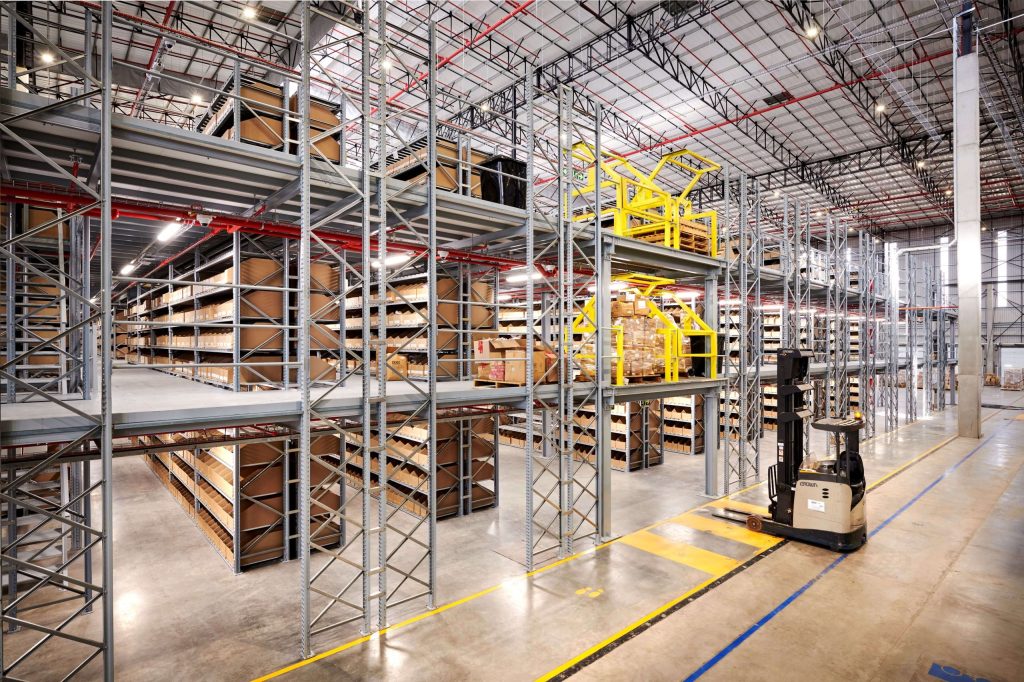
Leveraging vertical space is one of the most valuable warehouse organisation tips for boosting storage capacity without expanding your warehouse footprint. Vertical storage racking systems — such as multi-tier shelving or mezzanine racking — are created to utilise the full height of a warehouse and facilitate structured storage of items from floor to ceiling.
This industrial storage technique is perfect for depots with limited floor space but substantial overhead room. Businesses can amplify their inventory capacity while maintaining a smooth flow of goods by employing vertical shelving and racking systems that grow upward rather than outward.
6. Selective Racking Technique
Selective racking is one of the most common and versatile pallet racking systems available. It allows direct access to each pallet or item stored, making it suitable for businesses with an extensive selection of products. Forklifts can access any pallet in the system without moving others — making it highly impactful for warehouses that require flexibility in stock management.
Distribution centres or large operations that need constant access to different items can use this technique as a core part of their warehouse storage solutions, ensuring products are always within reach and limiting time spent locating and retrieving stock.
7. Weighted Storage (Heavy Items on the Bottom) Technique
Weight distribution is one of the most important shelving and racking systems tips for warehouse safety and efficiency. Businesses can prevent the tipping or collapsing of shelving units by storing heavy items on the lower shelves and lighter ones on top. This weighted storage technique is most useful for bulk storage racking and heavy-duty shelving units, where stability is core to maintaining a safe environment.
Operations can improve safety while enhancing their storage capacity by correctly balancing weight loads across their industrial storage techniques — ensuring both employees and inventory remain protected from potential accidents.
Frequently Asked Questions
What are the most effective industrial storage techniques for a warehouse?
The most effective industrial storage techniques include selective racking, vertical storage, flow racking, and bulk storage racking. The right technique depends on your inventory type, turnover rate, and available floor and ceiling space. Combining multiple techniques tailored to your operations delivers the best results.
How do shelving and racking systems tips help improve warehouse efficiency?
Applying practical shelving and racking systems tips — such as storing heavy items on lower shelves, grouping products by size or weight, and using vertical space — reduces retrieval time, minimises accidents, and improves overall productivity in a warehouse environment.
What warehouse storage solutions work best for high-turnover inventory?
For high-turnover inventory, flow racking and FIFO (First-In-First-Out) racking systems are the most suitable warehouse storage solutions. These systems ensure that older stock is dispatched first, reducing waste and keeping products ready for quick dispatch at all times.
When should a business invest in heavy-duty shelving units?
A business should invest in heavy-duty shelving units when storing large, bulky, or heavy products that standard shelving cannot safely support. Industries such as construction, manufacturing, and logistics commonly rely on heavy-duty shelving to secure oversized loads and maintain a safe working environment.
What is the difference between pallet racking systems and standard shelving?
Pallet racking systems are specifically engineered to store goods on pallets and are accessible by forklifts, making them ideal for large-scale warehouse operations. Standard shelving, by contrast, is better suited for smaller, manually handled items. Pallet racking offers greater load capacity, vertical scalability, and flexibility for diverse inventory.
How do warehouse organisation tips reduce operational costs?
Effective warehouse organisation tips — like categorising products by type, implementing selective racking, and leveraging vertical storage — reduce time spent locating stock, lower the risk of product damage, and streamline picking and dispatch processes. This directly translates to reduced labour costs and improved operational efficiency.
Conclusion
Reviewing and implementing the right industrial storage techniques can establish a systematic, organised, and safe warehouse. Whether a business handles high-turnover products or large, heavy equipment, the right shelving and racking systems — from pallet racking systems to heavy-duty shelving units — can improve workflow, maximise space, and ensure accessibility.
From selective racking to vertical storage, these warehouse storage solutions and warehouse organisation tips offer a comprehensive guide to creating an optimised warehouse that meets the specific conditions of your operations.
Krost Shelving’s solutions are specialised in the design, production, and implementation of high-quality storage systems. Our catalogue contains Shelf Units, Racking Systems, Mezzanine Floors, and Storage Lockers crafted with your business in mind. Contact Krost Shelving today to optimise your warehouse storage.

